
The volume growth of India's FMCG industry has slowed down in the March quarter to 5.1 per cent, driven by increased consumer purchases of small-value packs, according to the latest report from data analytics firm NielsenIQ. Volume growth is slowing across categories, and non-food segments are still outpacing food in the FMCG sector.

Marico is expected to post high single-digit volume growth in the India business in the July-September quarter. However, it is expected to moderate sequentially, the company said in its quarterly update on exchanges.

A NielsenIQ report indicates that the FMCG industry's sales growth moderated to 7.8% in the December quarter of 2025, with volume growth also dipping due to GST rationalisation and a high base from the previous year's festival season.

Hindustan Unilever Limited's (HUL's) standalone revenue grew 4.4 per cent year-on-year (Y-o-Y), while volume rose 3.5 per cent during the third quarter of financial year 2026 (FY26).

Home loan demand is moving away from core metropolitan markets, with Tier-2 and Tier-3 cities emerging as the dominant contributors to growth in 2025, a report said.

Jewellery makers are set to post strong revenue growth in the 2025-26 (FY26) October-December quarter (Q3), supported by a robust wedding season and rising value growth, even as volumes decline.

Passenger vehicle (PV) sales growth in India is expected to moderate to 3-5 per cent year-on-year (Y-o-Y) in financial year 2027 (FY27) due to a high base and preponed replacement demand, according to a report released by India Ratings and Research on Thursday.
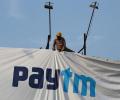
Brokerage firm Jefferies maintains a 'Buy' rating for Paytm, citing its dominant merchant payments platform and projected revenue growth.

Shares of electric vehicle (EV) maker Ola Electric Mobility fell nearly 7 per cent to a fresh low on Monday after its revenue growth in the third quarter (October-December/Q3) of 2025-26 (FY26) slowed, with analysts warning that any turnaround could be prolonged.

India's manufacturing sector experienced a significant growth spurt in February, reaching a four-month high driven by strong domestic demand, according to the HSBC India Manufacturing PMI.

The stock of the country's largest beer maker, United Breweries (UBBL), is trading at 25-month lows given multiple headwinds related to volumes, regulatory issues, and margin trajectory. After a muted second quarter (July-September) of 2025-26 (Q2FY26), brokerages also expect the company's Q3FY26 performance to be underwhelming.

S&P Global Ratings has increased India's GDP growth forecast for the next fiscal year to 7.1 per cent, citing private consumption, investment, and exports as key drivers. However, the agency also cautioned that the conflict in the Middle East could strain India's fiscal position due to higher energy prices.

A new study suggests a link between high consumption of ultra-processed foods and reduced fertility in men, slower embryo growth, and smaller yolk sacs.

This would imply a 29 per cent year-on-year rise, significantly lower than growth rates seen in recent years.

Hindustan Unilever Ltd's (HUL's) second quarter 2025-26 (Q2FY26) consolidated revenue rose 2 per cent to Rs 16,250 crore, with low or flat volume growth. Demand remained stable but goods and services tax (GST) transition and prolonged monsoon hurt offtake.

Britannia Industries is looking to drive volume-led growth as it looks to target regions, consumer-centric products and distribution. The company also wants to make sure that it is price-competitive in each of the regions.

Tech giant Apple has recorded its highest-ever value share of 28 per cent in the Indian smartphone market, driven by a surging "premiumisation" trend where consumers are increasingly opting for high-end devices, according to a report by Counterpoint Research.
FMCG major Hindustan Unilever Ltd (HUL) on Thursday reported a two-fold jump in consolidated net profit to Rs 6,603 crore in the December quarter of FY'26, on a year-on-year basis, driven by a one-off positive impact from the demerger of its ice cream business.

Brokerages expect the company to continue outperforming in the auto segment, driven by launches and the strong trajectory of healthy bookings.

The stock of automative major Eicher Motors hit its all-time high on Wednesday, capping the year with gains of about 52.7 per cent. It has comfortably outperformed its sector index, the Nifty Auto, which jumped 22.7 per cent, as well as the benchmark Nifty, which rose 10 per cent during this period.

A strong third-quarter (October-December/Q3) performance for 2025-26 (FY26) has helped the stock of India's largest listed pharmaceutical (pharma) company, Sun Pharmaceutical Industries, gain about 7 per cent since the start of February.

Stocks of fast-moving consumer goods companies have taken it on the chin in calendar year 2026 (CY26) with the Nifty FMCG index falling over 6 per cent compared to the Nifty 50 dipping 0.8 per cent. Nifty FMCG is one of the worst-performing sectors on the NSE in CY26.

Exports of 19 major commodities, including petroleum products, coal and marine items, saw growth in terms of volume during April 2023-February 2024, even as they witnessed contraction in value terms during the same period. Government officials said the rise in export volume despite a decline in value implies that these commodities show a stronger market demand.

Leading automakers in India, including Maruti Suzuki, Tata Motors, Mahindra & Mahindra, and Hyundai, reported increased vehicle dispatches to dealers in February, driven by sustained domestic demand.
Leading automakers in India, including Maruti Suzuki, Tata Motors, Mahindra & Mahindra, and Hyundai, reported increased vehicle dispatches to dealers in February, driven by sustained domestic demand.

German carmaker Audi plans to reassess and adjust its product launch strategy in India once the specific details of import duty reductions under the India-EU free trade agreement (FTA) become clear, according to Balbir Singh Dhillon, the brand's director in India.

Dabur's business update for Q3FY26 indicated mid-single digit consolidated revenue growth. The guidance is that growth in operating and net profits will beat revenue growth. In the domestic business, home and personal care (HPC) revenue grew in double digits, while healthcare is likely to post a sequential growth in low-single digits.

Domestic automobile retail sales in India experienced a significant surge of 26 per cent year-on-year in February, driven by improved affordability and market confidence across various segments, according to FADA.

Coca-Cola India's volume growth is in sharp contrast to its growth worldwide. Worldwide, the beverage giant registered a volume growth of just five per cent in the reported quarter.

At the heart of this debate is Section 3(d) of the Patents Act, a safeguard designed to prevent drugmakers from extending monopoly protection through trivial modifications to existing medicines.
Coal India's (CIL's) revenue for the first quarter of 2024-25 (Q1FY25) came in at Rs 36,500 crore, up 1 per cent year-on-year (Y-o-Y) and down 3 per cent sequentially, which was in line with consensus. The blended average selling price was Rs 1,687/tonne, down 5 per cent Y-o-Y and down 1 per cent Q-o-Q, which was below estimates. The adjusted operating profit (excluding overburden removal or OBR costs) stood at Rs 11,500 crore up 3 per cent Y-o-Y and up 17 per cent Q-o-Q, which beat the street. This was due to lower operating expenses.

Fast-moving consumer goods (FMCG) companies are expected to report mid-single-digit revenue growth in the July-September 2025-26 quarter, according to their quarterly updates. Most companies also noted that supply chains were focused on liquidating existing stock ahead of the implementation of new goods and services tax (GST) rates in categories where the tax was lowered.

'Despite a challenging FMCG environment, ITC Foods has grown at or above the industry rate.'

While the introduction of branded generics is likely to accelerate volumes for GLP-1 agonists, value growth may moderate because of price erosion.

Skoda India is focusing on cleaner fuel options, including CNG and EVs, while compact SUV Kylaq drives volumes, expands first-time buyers and strengthens the brand in India's competitive market

A pickup in freight rates, rising fleet utilisation and a long-awaited replacement cycle are breathing fresh life into India's commercial vehicle (CV) market, strengthening the investment case for Tata Motors' CV arm (TMCV). Despite a broadly steady December quarter (Q3) performance, brokerages remain divided on whether the upswing is strong enough to offset margin pressures.
Driven by GST reforms, robust festive demand, and softening raw material prices, the FMCG industry expects volume-based growth, supported by a mid-single digit revenue rise and improved operating margins in the December quarter.

The production-linked incentive (PLI) scheme for the automobile sector has created market distortions, excluded innovation-led electric two-wheeler (e2w) makers, and failed to convert cost advantages into export competitiveness, with 77 per cent of export volumes driven by non-PLI models, said a report released by the Centre for Domestic Economy Policy Research (C-DEP) on Friday.

Rural India outpaced urban centres in passenger vehicle sales in 2025, recording a growth of 12 per cent compared with 8 per cent in cities.

The automobile and auto-ancillary sector is expected to show strong Q3FY26 results, aided by festival-led demand, rationalisation in goods and services tax (GST) rates for select categories of vehicles, easing interest rates, and improving rural sentiment.
 © 2026 Rediff.com - Advertise with us - Disclaimer - Privacy Policy - Sitemap - Feedback - About us - Terms of use - Grievances